Evaluation
Throughout this project i was asked to mainly update my blog with coursework i have produced during the semester. All of my work can be traced back to last year where i first began with the animation of a small tyrannosaurus rex up to now where i have recently produced both a book filled with my work and three final sketches.


Along with my coursework and development I have also had to add necessary
requirements to include in my uploads such as my research, twice weekly update,
SWOT analysis where I list my strengths and weaknesses, the evaluations of
every single project and the SMART targets where I plan to confront the targets
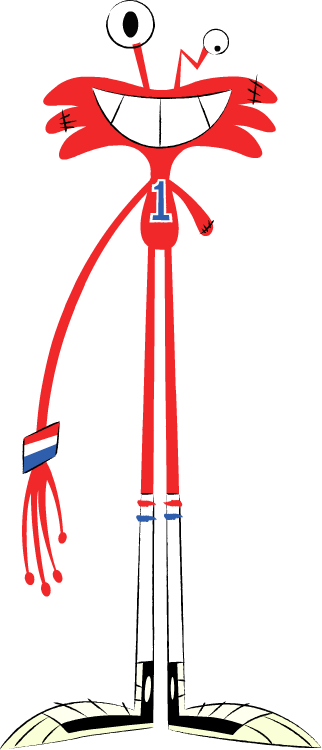
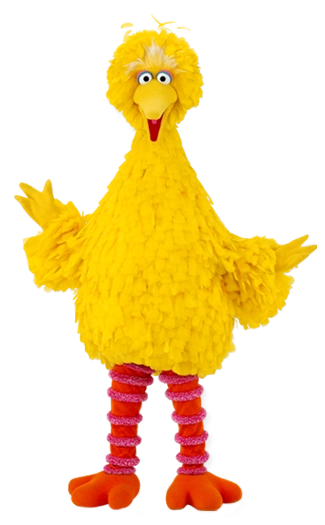
I have set out to do. Accompanying them were also the artists who helped influence my work such as Fawn Gehweiler, Charles Burns and the combination of two character like Wilt from fosters home for imaginary friends and big bird from sesame street.
I have been researching
through skillset to look out for specific job roles that I have an interest in
here I can use the skills and techniques I have learnt over the years to
display my work. First off there’s the screenwriting job where I could put publish
my own personal stories of my characters along with the descriptive text that
ive been given by a client to produce a story that once fully written up can
lead to creating either an illustration or animation. I can meet most of the
requirements needed to take on the job especially with setting up the character
individually although I reckon taking rejection of supposed good ideas might
be a little upsetting but I guess I could handle it.
For my second part I have researched storyboarding which Is quite a familiar area for me since I have produced multiple ideas over the years along with build ups for my comic strips. I believe I can meet most of the required skills necessary to gain this job although I still reckon I need to work on my software developing skills especially with today’s programs such as Cinema4D, After-Effects and Premier. Honestly I would prefer to stick to the traditional frame-by-frame technique since even though it is slow it is very simple but today’s society prefers highly advanced digital graphics.
As for my third job I have looked up the importance of being an Inbetweener where you have to complete a pose in a key animation scene to complete the movement such as a transformation in to another form. I believe I can meet all of the requirements for this job especially with the patience.
I also came across the concept artist where at first I seem intrigued about this job role but found the skills and requirements that are need for the career a little too overwhelming far surpassing my own skills, especially with the digital side.
To combat the weaknesses I have had I shall plan to make time throughout the months to overcome theses hindrances such as using the studios light box more often to copy an exact replica of image instead of causing crooked duplicates along with practising and experimenting more with Cinema4D to remember the steps of animating a rigged character more4 accurately. There is also the matter of keeping backgrounds in sync with the rest of the image I would be producing; I should really get out more to find a good view of an area where I can illustrate its appearance such as Leazes Park Lake.
As for opportunities I should really look out for more art competitions such as Adobe Awards and Derwent art where I can compete with others and become inspired from their work, this will also allow me to show my work off to clients so that can get myself noticed. Apart from my blog I should also make a page on my Facebook account where I can display both former project work and personal work, where both friends colleagues and others can view my ideas so that I can attract the attention of those who are looking for someone with my skills since through my friends who might be acquainted with that certain person.
Finally to confront the
threats I shall see what I can accomplish with the time I have such as piecing
together my own book and final illustrations for my live brief. If I can’t use
the materials I had originally planned to use to produce my ideas I will find
an alternate solution to use instead. Obliviously the main threat to tackle is
the use of a new style or technique to insert in to the artwork I plan to
produce luckily since my tutor has provided me with a site known as digital
arts I can search for a style I could use to my advantage.


There was also the matter of looking into competitions and companies such as Disney, Marvel Adobe Awards and DerwentArt who i could offer my skills and techniques to for designing ideas along with my skill set research where i have looked up job roles that i am mainly interested in pursuing a career such as concept artist, an Inbetweener, storyboard designing and screen writing. Once again this also led me to break down and compare my own personal strengths and weaknesses for what is required in obtaining the e.g. drawing skills, digital skills patience, imaginative etc.
Along with them there was also looking out for animation festivals like Pictoplasma Animaze daze in cannes, Trollywood animation festival hamburg animation award Euganea film festival and Countryside Animafast cyprus. Most of these events are hosted in Europe.


As a little extra to add to my progress file i had to update both my CV and cover letter to show my interest in looking for employment within either an animation/illustration company. For my last finishing touch i also needed to include my very own business card that featured what best way i could represent myself resulting in a line up of my personal characters accompanied by silhouettes of those i have yet to finalise and the list containing my contact details. Sadly however i haven't been able to have it printed out as an actual card so i've had to resort to for now temporarily use a paper version.

Overall i have found this project both interesting and fun being to not only to display my work for the public to view but to also look back and search for areas of improvement such as my comic strip. Apart from my Facebook page i will still upload artwork on to my blog more often to gain the attention of clients
If your wondering where my application for ucas level
6 is I didn’t bother with filing one since I have decided to finish college
this year because I feel it is time to move on after 6 years of education, plus
it would be a good opportunity to see how I cope independently with achieving a
career after graduation. However if things do not quite work out as to how I
planned I will consider coming back to complete the optional 3rd
year.
Swot analysis and research
Strengths
• Planning
out story plots and breaking down scenes
• Character
designing
• Character
biographies
• Working
independently
• Working
together with a team
• Experienced
in Photoshop
• Communication
skills
Weakness’s
- Copying an exact image
- Working with unfamiliar techniques outside my comfort zone
- Remembering the multiple steps in animating a character in cinema4
- Backgrounds angle and distances out of sync
Areas
of improvement
· Experiment
more on Cineama4D and other software
· Search
and practice with new styles/techniques
· Sketch
more backgrounds accurately
· Use
light boxes and mirror to help copy an image
· Upload
both recent and personal work more often online.
· Explore
for inspiration to bring forth more personal characters.
· Look
more illustrator competitions
Opportunities
· Look
out for competitions to display my work and gain the attention of clients.
· Search
for festivals such as Pictoplasma that offer inspiration and a chance to
interact with other artists.
Threats
· Working
with a new style that is unfamiliar might cause setbacks
· Delays
can cause time consumption
· Lacking
the necessary materials can cause work to become incomplete.
For my second part I have researched storyboarding which Is quite a familiar area for me since I have produced multiple ideas over the years along with build ups for my comic strips. I believe I can meet most of the required skills necessary to gain this job although I still reckon I need to work on my software developing skills especially with today’s programs such as Cinema4D, After-Effects and Premier. Honestly I would prefer to stick to the traditional frame-by-frame technique since even though it is slow it is very simple but today’s society prefers highly advanced digital graphics.
As for my third job I have looked up the importance of being an Inbetweener where you have to complete a pose in a key animation scene to complete the movement such as a transformation in to another form. I believe I can meet all of the requirements for this job especially with the patience.
I also came across the concept artist where at first I seem intrigued about this job role but found the skills and requirements that are need for the career a little too overwhelming far surpassing my own skills, especially with the digital side.
To combat the weaknesses I have had I shall plan to make time throughout the months to overcome theses hindrances such as using the studios light box more often to copy an exact replica of image instead of causing crooked duplicates along with practising and experimenting more with Cinema4D to remember the steps of animating a rigged character more4 accurately. There is also the matter of keeping backgrounds in sync with the rest of the image I would be producing; I should really get out more to find a good view of an area where I can illustrate its appearance such as Leazes Park Lake.
As for opportunities I should really look out for more art competitions such as Adobe Awards and Derwent art where I can compete with others and become inspired from their work, this will also allow me to show my work off to clients so that can get myself noticed. Apart from my blog I should also make a page on my Facebook account where I can display both former project work and personal work, where both friends colleagues and others can view my ideas so that I can attract the attention of those who are looking for someone with my skills since through my friends who might be acquainted with that certain person.

There was also the matter of looking into competitions and companies such as Disney, Marvel Adobe Awards and DerwentArt who i could offer my skills and techniques to for designing ideas along with my skill set research where i have looked up job roles that i am mainly interested in pursuing a career such as concept artist, an Inbetweener, storyboard designing and screen writing. Once again this also led me to break down and compare my own personal strengths and weaknesses for what is required in obtaining the e.g. drawing skills, digital skills patience, imaginative etc.
Along with them there was also looking out for animation festivals like Pictoplasma Animaze daze in cannes, Trollywood animation festival hamburg animation award Euganea film festival and Countryside Animafast cyprus. Most of these events are hosted in Europe.


Job roles

Concept Artist
- Industries:
- Personality type:
- Departments:
The lowdown
- producing the illustrations that help Production Designers realise their vision
- making sure their drawings are accurate and clear and adapting them as necessary during filming
- using computer illustration software packages
Is this role right for me?
To do this role, you will need to:
- have up-to-date knowledge of computer illustration software packages
- be skilled in film imagery
- understand what Directors, Directors of Photography and Editors require from a scene
- have excellent illustration skills
- be a strong communicator
- visualise perspective and 3D space
- have a keen interest in design, architecture and film
- visually interpret other people's ideas
- be flexible and adapt to change when asked
- work as part of a team
- know about relevant health and safety legislation and procedures
What does a Concept Artist do?
Concept Artists work on big budget sci-fi, fantasy or historical films where visual and special effects create design spectacles, fantastical creatures or other invented elements. There are usually a number of Concept Artists, each working on a specific element, e.g., a fantastical creature and/or scene.
Concept Artists start work at the beginning of pre-production, up to six months before filming is due to begin.
If the screenplay is an adaptation (for example, of a book), they analyse the descriptions in the original source material. They may work with Specialist Researchers who also help source and supply relevant information and materials.
Concept Artists work in the art department studio alongside Draughtsmen and Specialist Researchers and often produce their drawings on a computer using Painter or Photoshop software. After approval by the Production Designer, the drawings are presented to the Producer, Director and Visual Effects Co-ordinator.
Concept Artists work in the art department studio alongside Draughtsmen and Specialist Researchers and often produce their drawings on a computer using Painter or Photoshop software. After approval by the Production Designer, the drawings are presented to the Producer, Director and Visual Effects Co-ordinator.
Concept Artists must produce illustrations that are striking but also accurate and clear. They work on illustrations throughout the shoot and may often be required to change and adapt their original ideas as filming progresses.
They may also be involved in the development process, producing a series of illustrations that help to sell the film to potential Financiers and/or Distributors.
Concept Artists work on a freelance basis. Their role is highly specialised and there is a limited demand for this work.
Will I need a qualification?
You can study an arts school course with a focus on draughting skills, graphics and conceptualising ideas e.g., fine art, graphics, illustration etc. However, there is no formal training or qualification for this job.
What's the best route in?
There is no typical career route to becoming a Concept Artist. You could start off as a Graphic Artist, Illustrator or Graphic Novelist. Otherwise, you can work in special or visual effects or animation and make the transition to Concept Artist via storyboarding.
You could also apply to be a VFX Trainee through Trainee Finder, which gives you hands-on experience in the industry and helps you build those all-important contacts that are essential when competing for a job:
Interested? Find out more...
Websites
- British Film Designers Guild
- The American Cinematographer Manual has regular features on film design and digital production techniques.
Publications
- Ken Adam: The Art of Production Design
- (Faber and Faber) by Christopher Frayling
- Production Design and Art Direction (Focal Press) by Peter Ettedgui
- By Design: Interviews with Film Production Designers (Greenwood Press) by Vincent LoBrutto
- Film Architecture: From Metropolis to Blade Runner (Prestel Publishing Ltd). Edited by D Neumann 2001
- Filming the Future (Aurum Press Ltd) by Piers Bizony
- The Invisible Art: The Legends of Movie Matt Painting
- (Chronicle Books) by M Cotta Vaz and C Barron

Storyboard Artist (Animation)
- Industries:
- Personality type:
- Departments:
The lowdown
- Illustrating the narrative, planning shots, and drawing panels to demonstrate action and maintain continuity between scenes of an animation
Is this role right for me?
To do this role, you will need to:
- be able to tell a good story
- be highly film literate, with a good understanding of layout, composition, sequential drawing and editing
- have excellent drawing skills and the ability to adapt to a wide range of styles
- be able to work either independently or as part of a team
- be able to take direction, and be prepared to make changes to your work in response to constructive feedback
- be able to follow established designs and produce consistent work, drawn on model
- have good communication and presentation skills
- have good computer literacy
- be familiar with relevant storyboard, graphics and editing software
- be conscious of any relevant technical or budgetary restrictions
- be able to work calmly and efficiently to tight deadlines
What does a Storyboard Artist (Animation) do?
Storyboard Artists illustrate the narrative, plan shots, and draw panels to demonstrate action and maintain continuity between scenes. They work closely with the Director and, possibly, with the scriptwriter, Producer, client or Storyboard Supervisor, to visualise and tell the story.
They may be required to prepare the storyboards for production, including indications of dialogue, character performance and camera moves, and could be asked to produce their work either as rough or cleaned-up drawings.
Clean panels are less likely to be required for a computer-generated film, where tight drawings of a character may not be relevant. However, on a project where all the animation is being produced overseas, it may be necessary to present the characters very accurately.
They may need to revise their work to reflect a changing script or comments from the Director, Producer or client.
They may be required to prepare the storyboards for production, including indications of dialogue, character performance and camera moves, and could be asked to produce their work either as rough or cleaned-up drawings.
Clean panels are less likely to be required for a computer-generated film, where tight drawings of a character may not be relevant. However, on a project where all the animation is being produced overseas, it may be necessary to present the characters very accurately.
They may need to revise their work to reflect a changing script or comments from the Director, Producer or client.
Will I need a qualification?
It is not essential for you to have an animation degree, but many Storyboard Artists are animation graduates. These degrees provide a basic understanding of film theory, and experience of storyboarding, on which you will be able to build as your career progresses. You could also progress to this role having done a film degree.
If you are considering taking an animation or film course in higher education, the following courses have been rigorously assessed by the animation and film industries and awarded the Creative Skillset Tick for the high standard of education they provide and the degree to which they prepare you for an animation or film career:
If you are considering taking an animation or film course in higher education, the following courses have been rigorously assessed by the animation and film industries and awarded the Creative Skillset Tick for the high standard of education they provide and the degree to which they prepare you for an animation or film career:
What’s the best route in?
Storyboard Artist is not an entry-level role. You will be more likely to work your way through part of the animation studio system, probably entering the system as an animation graduate, before reaching this role. Many Storyboard Artists have been Animators or they may still alternate between the two roles. Others come from the layout department.
You could also follow a route to this role having graduated from an art course, such as graphics or illustration, having developed an interest in film technique and storytelling. Alternatively, you could work in live action storyboarding before moving into animation, but bear in mind that the skills developed for storyboarding commercials do not necessarily apply to longer format productions.
You could also follow a route to this role having graduated from an art course, such as graphics or illustration, having developed an interest in film technique and storytelling. Alternatively, you could work in live action storyboarding before moving into animation, but bear in mind that the skills developed for storyboarding commercials do not necessarily apply to longer format productions.
You could apply to be a trainee through Trainee Finder, which gives you hands-on experience in the industry and helps you build those all-important contacts that are essential when competing for a job:
Interested? Find out more...
Websites
- Animation Magazine - a US magazine about the business, technology and art of animation and VFX
- Animation World Network - production news, interviews, jobs and a big archive
- Shooting People – community-driven site, founded by filmmakers, and providing opportunities, news and animation jobs
- Skwigly Animation Magazine - the longest running UK based animation magazine and community. Offers news, interviews, reviews, podcasts, videos and tutorials
- Toonhound – website about cartoons, animation, comic strips and puppets in the UK
- Own-it - offers intellectual property (IP) advice, information and learning resources for the creative sector
- Animation Nation - Animation industry news and useful links
- 3D World Magazine - international magazine for CG artists, covering the fields of animation, VFX, games, illustration and architecture
- Computer Graphics World - magazine covering innovation in computer graphics technology across various industries
- Cinefex - quarterly magazine devoted to motion picture visual effects
Books
- The Art and Science of Digital Compositing by Ron Brinkmann (pub. Morgan Kaufmann Publishers)
- Digital Compositing by Steve Wright (pub. Butterworth-Heinemann)
- Visual Effects in A Digital World: A Comprehensive Glossary of over 7,000 Visual Effects Terms by Karen Goulekas (pub. Morgan Kaufmann Publishers)
- How to Get a Job in Computer Animation by Ed Harriss

Inbetweener
- Industries:
- Personality type:
- Departments:
The lowdown
- Producing the drawings between key poses in order to complete the illusion of movement and action
Is this role right for me?
To do this role, you will need to:
- possess excellent drawing skills, to be able to adapt to the style and technique of different productions
- be able to take direction
- pay close attention to detail
- have good team-working skills
- have good communication and presentation skills
- have a high degree of patience
- show respect for the procedures and requirements of a particular studio, production or pipeline
What does an Inbetweener do?
Inbetweeners produce the drawings between previously completed key poses, in order to complete the illusion of movement and action.
They are responsible for producing neat and accurate inbetween drawings, as directed by the Assistant Animator, Animator or Animation Director.
An inbetweening job can provide an excellent opportunity to learn about the realities of working in an animation studio and the pressures of working as part of a team. Although the Animators' work may be in rough, Inbetweeners are more likely to be asked to produce cleaned up drawings, referring to existing animation and model sheets.
The role is most likely to exist in character animation, but Inbetweeners are sometimes needed on non-character work and in visual effects animation.
They are responsible for producing neat and accurate inbetween drawings, as directed by the Assistant Animator, Animator or Animation Director.
An inbetweening job can provide an excellent opportunity to learn about the realities of working in an animation studio and the pressures of working as part of a team. Although the Animators' work may be in rough, Inbetweeners are more likely to be asked to produce cleaned up drawings, referring to existing animation and model sheets.
The role is most likely to exist in character animation, but Inbetweeners are sometimes needed on non-character work and in visual effects animation.
Will I need a qualification?
It would help you to have a degree in animation although at this stage, drawing skills may be more valuable than knowledge of animation. So, as well as animation courses, art, graphic design and illustration courses can give you the skills you will need, as long as your portfolio demonstrates strong draughtsmanship skills.
If you are considering taking an animation or art and design/graphics course in higher education, the following courses have been rigorously assessed by the industry and awarded the Creative Skillset Tick for the high standard of education they provide and the degree to which they prepare you for a creative career:
If you are considering taking an animation or art and design/graphics course in higher education, the following courses have been rigorously assessed by the industry and awarded the Creative Skillset Tick for the high standard of education they provide and the degree to which they prepare you for a creative career:
What’s the best route in?
This can be an entry-level job for you as a new graduate, as you should have gained a foundation and vocabulary that would give you a good start in the industry. Employers in all 2D studios will look at your life drawing skills in particular as a standard way to judge your talent.
You could get a job as an Inbetweener having started out as a Runner, as long as you have the appropriate talent.
You could get a job as an Inbetweener having started out as a Runner, as long as you have the appropriate talent.
You could apply to be a trainee through Trainee Finder, which gives you hands-on experience in the industry and helps you build those all-important contacts that are essential when competing for a job:
Interested? Find out more...
Websites
- Animation Magazine - a US magazine about the business, technology and art of animation and VFX
- Animation World Network - production news, interviews, jobs and a big archive
- Shooting People – community-driven site, founded by filmmakers, and providing opportunities, news and animation jobs
- Skwigly Animation Magazine - the longest running UK based animation magazine and community. Offers news, interviews, reviews, podcasts, videos and tutorials
- Toonhound – website about cartoons, animation, comic strips and puppets in the UK
- Own-it - offers intellectual property (IP) advice, information and learning resources for the creative sector
- Animation Nation - Animation industry news and useful links
Books
- The Animator's Survival Kit by Richard Williams (pub. Faber & Faber)
- Timing for Animation by Harold Whittaker and John Halas (pub. Focal Press)
- The Complete Animation Course: The Principles, Practice, and Techniques of Successful Animation by Chris Patmore (pub. Barron's Educational Series)
- Acting for Animators: A complete guide to Performance Animation by Ed Hooks (pub. Greenwood Press)

Screenwriter
- Industries:
- Personality type:
- Departments:
The lowdown
- Researching and developing story ideas
- Writing screenplays
Is this role right for me?
To do this role, you will need to:
- Have an in-depth understanding of story, plot and narrative
- Understand the different ways that films affect audiences
- Be familiar with current formats for presenting screenplays
- Be able to demonstrate creative imagination
- Be able to bring to life the individuality of characters
- Be able to write visually, using sound and dialogue to support action
- Be dedicated and well organised
- Be able to work as part of a team
- Be able to work to strict deadlines
- Be able to handle frequent rejection
- Be ambitious
- Be realistic
What does a Screenwriter do?
Screenwriters create screenplays for films. They provide the blueprint for the creative input of the Producer, Director, Production Designer, Composer and Editor, cast and crew.
Screenplays should allow whoever is reading it to imagine how the film will work on screen. It should feature fascinating characters, an exciting plot, and a great idea for a marketable film. It should also fit in with basic principles of dramatic construction, and fit the format and style expected in the industry.
Screenwriters have to produce highly creative writing, to strict deadlines. They work with a script development team to create a finished product that is likely to be financed and made. Sometimes producers bring in an additional Screenwriter to improve certain aspects of the screenplay. In this case, the Screenwriter may share a credit with the original Screenwriter. Or they may be credited for Additional Dialogue, or as a Story Consultant.
In some cases the original Screenwriter may be replaced entirely by another Screenwriter. In this case the original Screenwriter may then receive a "Screenstory by..." credit on the finished film.
Screenwriters are almost always freelancers. They either pitch original ideas to Producers in the hope that they will be optioned or sold. Or they are commissioned by a Producer to create a screenplay from a concept, true story, existing screenwork or a novel, poem, play, comic book or short story.
Screenwriters are almost always freelancers. They either pitch original ideas to Producers in the hope that they will be optioned or sold. Or they are commissioned by a Producer to create a screenplay from a concept, true story, existing screenwork or a novel, poem, play, comic book or short story.
Many more screenplays are commissioned than films are made. Only a few top UK Screenwriters make enough money to sustain themselves entirely through writing screenplays.
Will I need a qualification?
You don’t need formal training or a specific qualification. You can go on screenwriting courses or take an MA. If you are considering taking a film production course in higher education, the following courses have been rigorously assessed by the film industry and awarded the Creative Skillset Tick for the high standard of education they provide and the degree to which they prepare you for a career in film:
What's the best route in?
You will need to write some original short and feature screenplays 'on spec' (self-financed) to try to attract the attention of Producers and Agents. A screenplay is always a first draft screenplay until it is sold and you will also need to prepare pitches, synopses and outlines. Producers sometimes ask for these before they are prepared to read the screenplay itself.
Business card

Overall i have found this project both interesting and fun being to not only to display my work for the public to view but to also look back and search for areas of improvement such as my comic strip. Apart from my Facebook page i will still upload artwork on to my blog more often to gain the attention of clients
Over these recent past weeks I have been updating my blog with both current and missing work from projects along with the necessary added requirements such as these twice-weekly reflections, swot analyses and smart targets. As for the worked based learning I have been researching on skillsets and looking up local competitions such as adobe awards and DerwentArt. On the other hand I have also been getting my final work edited which will feature two dragons duelling each other, along with binding my book.

No comments:
Post a Comment